
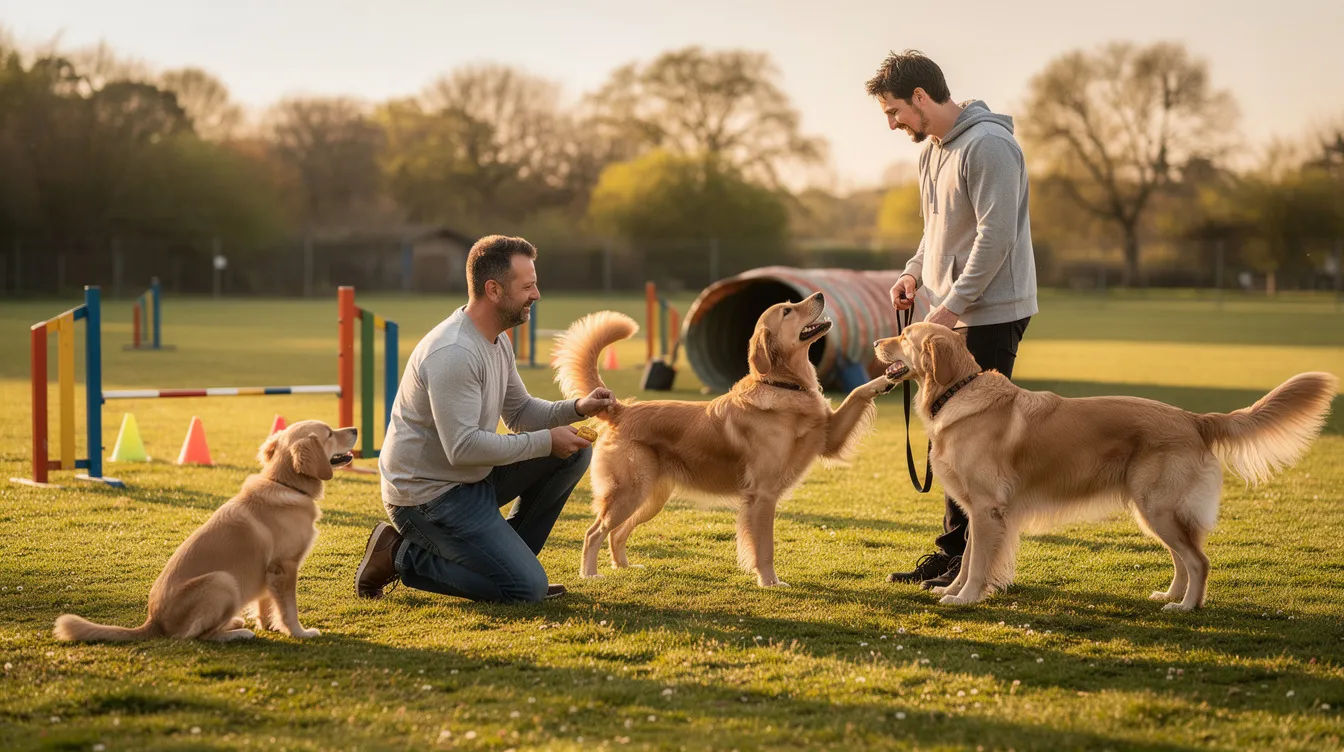
Dog training typically takes 4 to 6 weeks for basic obedience, 3 to 6 months for behavior modification, and 6 months to a year for advanced off-leash reliability. There is no simple answer that applies to every dog, but these ranges reflect what most dogs achieve under consistent, professional guidance. The training timeline depends heavily on your dog’s age, breed, temperament, behavioral history, and-critically-how much consistent work happens between sessions.
This guide covers realistic timelines for private training sessions, board & train intensive programs, and behavior modification for dogs of all ages and breeds. Whether you’re raising young puppies, working with adult dogs on foundational obedience, or addressing serious behavioral challenges like aggression or reactivity, you’ll find data-backed expectations here. While we draw on our experience serving dog owners in the New River & Roanoke Valley area, these timelines apply broadly to professional training programs nationwide.
Most dogs show initial progress within 2–3 weeks of structured training. Basic obedience is commonly achieved in 6–8 weeks with consistent practice. Reliable off-leash control generally takes 4–6 months of ongoing reinforcement across different environments.
By reading this guide, you’ll gain:
- Realistic timelines for each stage of the training process
- Understanding of the factors that speed up or slow down how quickly a dog learns
- Clarity on how to choose between private lessons, board & train, and specialized programs
- Strategies for overcoming common training challenges
- Guidance on maintaining long-term results after the core program ends
Understanding Dog Training Fundamentals
Professional dog training is systematic behavior modification. It uses scientifically grounded training methods-operant conditioning, positive reinforcement, counterconditioning, and structured exposure-to produce reliable, reproducible behavior change. It is not an instant fix. It’s a structured process where a professional trainer works with both dog and owner to build lasting habits. Understanding these fundamentals helps pet owners set expectations before committing to any program.
Basic Obedience Training
Basic obedience covers the essential commands every dog needs: sit, stay, come, heel, and leash manners. These foundational skills form the basic communication between dog and owner and serve as prerequisites for everything else. Basic obedience training typically takes 4 to 6 weeks with daily training sessions and consistent practice at home. A study of 166 shelter dogs found that dogs averaged about 4.67 training sessions to learn approximately 2.7 new behaviors, confirming that dogs can acquire basic commands relatively quickly when training is structured and frequent. However, generalizing those skills across different environments takes additional time.
Basic training is the starting point for every dog’s life with their owner. Without reliable foundational obedience, more complex work-whether therapy dog preparation or off-leash control-cannot succeed.
Behavior Modification Programs
Behavior modification addresses deeper issues: aggression, reactivity, separation anxiety, excessive barking, fear-based responses, and other behavior problems that go beyond simple disobedience. Behavioral training can take 3 to 6 months to address specific issues, and severe cases involving deep-rooted aggression or phobias may extend to 3–12 months depending on severity.
This work builds on basic obedience as a prerequisite. A dog that doesn’t reliably respond to basic commands in calm settings won’t respond in high-stress situations where reactivity or aggression triggers are present. That’s why professional dog trainers address foundational skills first before layering in behavior modification-and why behavior modification timelines are always longer than basic obedience timelines.
Completing behavior modification is what enables the next stage: advanced training and off-leash reliability. Without resolving underlying behavioral issues, off-leash work would be unsafe and unreliable.
Training Timeline Breakdown by Program Type
The program type you choose has a major impact on how long it takes to train a dog. Private lessons, board & train intensives, and specialized programs each operate on different schedules and produce results at different rates. The right choice depends on your dog’s needs, your schedule, and the severity of issues you’re addressing.
Private Lesson Programs
Private lesson programs are typically scheduled weekly, with structured homework for the owner to practice between sessions. For basic obedience, expect 6–8 weekly sessions plus daily practice at home-roughly 6–8 weeks total to achieve reliable sit, down, stay, and recall under low-to-moderate distractions.
For behavior modification, private lessons typically extend to 12–16 sessions over 12–16 weeks or more. Progress depends heavily on owner compliance. If a dog owner spends time practicing daily in short sessions of 10–15 minutes, progress is steady. If home practice is sporadic, the training timeline stretches significantly.
The advantage of private lessons is a customized pace. Each dog and owner can move at their own pace, with the professional trainer adjusting the plan based on how quickly the dog learns and how consistently the owner reinforces at home. Short, frequent training sessions are more effective than long ones-and private lesson programs are built around this principle.
Board & Train Intensive Programs
Board & train programs compress the training process by having professional trainers work with the dog daily-sometimes multiple sessions per day-in a structured environment. This accelerates results significantly.
Common durations across the industry:
- 2–3 week programs for foundational and intermediate obedience. Dogs typically learn leash manners, impulse control, and reliable responses to basic commands in controlled settings. Many programs, including focused leash manners intensives, can address specific skills in even shorter timeframes.
- 4–6-week programs for complex behavioral issues and advanced obedience. Industry data shows that programs like Refined K9’s Behavior Modification Board & Train run 4–6 weeks for reactivity, leash aggression, and fear-based behaviors. The Academy of Canine Behavior’s 5-week intensive reports approximately 99.5% success in achieving target behaviors in controlled settings.
- 6–10 week programs for severe behavioral challenges. Some facilities allow dogs with significant aggression or fear issues to stay 6–10 weeks depending on triggers and severity.
Even the most intensive programs require owner follow-through. Transfer sessions-where the trainer teaches the owner how to maintain and reinforce the dog’s new behaviors-are non-optional for long-term success. A 3-week board & train delivers accelerated results, but those results only stick when the owner maintains consistent training routines at home.
Specialized Training Programs
Puppy jump-start programs: Puppies typically start training around 8 weeks old, and the critical socialization window runs from roughly 3–14 weeks of age. Puppy training programs covering early socialization, crate training, potty training, and impulse control generally run 3–4 weeks in a board setting or 6–8 weeks in a private lesson format. House training typically requires 1 to 3 months for reliable habits. Puppies usually learn foundational skills in 3 to 4 months overall.
Aggressive behavior rehabilitation: Behavior modification for moderate aggression or reactivity can show measurable changes in 6–12 weeks in a board & train setting, provided consistent follow-through. Behavior modification can take 3 to 12 months depending on severity. Severe cases involving human aggression, animal aggression, or deep fear responses often require months of professional supervision, gradual desensitization, and sometimes veterinary behaviorist input.
Advanced off-leash training: This requires rock-solid obedience and resolved behavioral issues as prerequisites. Advanced training can extend from 6 months to a year. Reliable off-leash recall, heel, and place commands in highly distracting, real-world environments typically emerge after 4–6 months of proofing across multiple locations with experienced handlers guiding the process.
Service dogs represent the end of the training timeline. Service dog training typically takes about 1.5 to 2 years, encompassing foundational obedience, advanced skills, task-specific training, and public access proofing. Therapy dog certification, while less intensive, still requires solid obedience and temperament evaluation beyond standard pet training.
Factors That Influence Training Duration
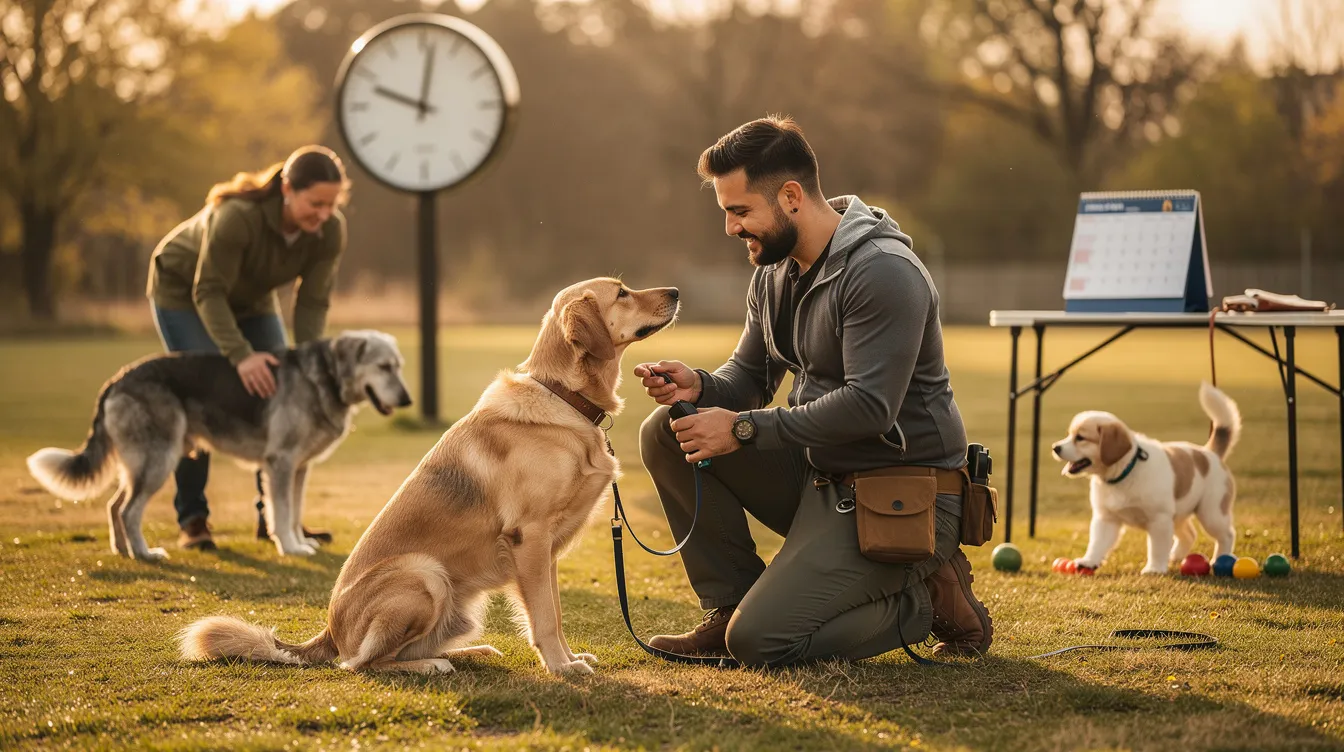
No two dogs learn at the same rate. Understanding why some dogs achieve faster progress helps you set realistic expectations and choose the right program. Training duration varies based on age, breed, and the type of training-but several other variables play a crucial role as well.
Dog-Related Factors
A dog’s age is one of the strongest predictors of training speed:
- Young puppies (8–16 weeks): Fast learners during critical developmental windows. They absorb early socialization, new behaviors, and foundational skills rapidly, though they need frequent short sessions because they can’t maintain focus for long periods. Puppies learn foundational cues faster but need frequent sessions.
- Adolescents (6–18 months): The “teenage” phase. Hormonal changes drive boundary-testing. A young dog at this developmental stage may show regression in previously learned commands. Adolescent dogs often test boundaries and may require reinforcement of learned commands. This is normal-not a sign of failure.
- Adult dogs (1–6 years): Behaviors are more cemented. Adult dogs can be trained with longer sessions due to better focus, but unlearning established habits takes a bit longer than teaching from scratch. K9 training for basic skills typically requires 2 to 4 months for adult dogs starting fresh.
- Older dogs (7+ years): Research confirms that responsiveness to training declines with age. Senior dogs can continue to learn but may need adapted training methods due to physical changes-arthritis, hearing loss, or reduced energy can affect the pace. Older dogs may take longer to adapt to new behaviors, but they are absolutely capable of learning.
A dog’s breed and genetics matter significantly. Working breeds like German Shepherds and the Border Collie tend to learn commands quickly but require mental stimulation to stay engaged. Labrador retrievers are widely regarded as eager-to-please learners. Independent breeds-many terriers, hounds, and guardian breeds-may require specialized motivation techniques and additional patience. Certain breeds learn faster than others, like Border Collies, but every breed can achieve reliable training with the right approach. Independent breeds may require additional patience and time for reliable training.
Previous experiences shape the training process profoundly. Dogs with past trauma may require more time to learn-extended trust-building, careful desensitization, and slower pacing. Rescue dogs with unknown histories often need extra assessment before training can even begin. Conversely, well-socialized dogs with positive early experiences progress predictably.
Current behavior issues determine scope. Mild problems like jumping, mouthing, or leash pulling typically resolve within weeks. Severe aggression, separation anxiety, or multi-trigger reactivity requires months of gradual conditioning and professional oversight.
Training Approach Factors
| Training Method | Typical Duration | Best For |
|---|---|---|
| Private Lessons | 6–12 weeks | Custom pace, owner involvement, specific issues |
| Board & Train | 2–6 weeks | Intensive results, busy schedules, severe behaviors |
| Group Classes | 8–12 weeks | Socialization, basic obedience, budget-conscious |
Choosing between these approaches depends on your lifestyle, your dog’s needs, and desired outcomes. The board and train vs. private lessons comparison comes down to this: board & train accelerates the dog’s learning under professional supervision, while private lessons build the owner’s skills simultaneously. Both require ongoing reinforcement.
Environmental factors also affect duration. Environmental distractions can significantly affect training effectiveness and duration. A dog that performs perfectly in a quiet training facility may struggle in a busy park. That’s why proofing-practicing in progressively challenging settings-is a non-negotiable part of building reliable dog behavior. Involve all household members in training for consistency, because a dog that only listens to one person hasn’t been fully trained.
Daily practice sessions accelerate training results significantly. Consistent routines help shorten the overall training timeline for dog training. The difference between most owners who see fast results and those who don’t often comes down to whether they maintain consistent work between professional sessions.
Common Training Challenges and Solutions
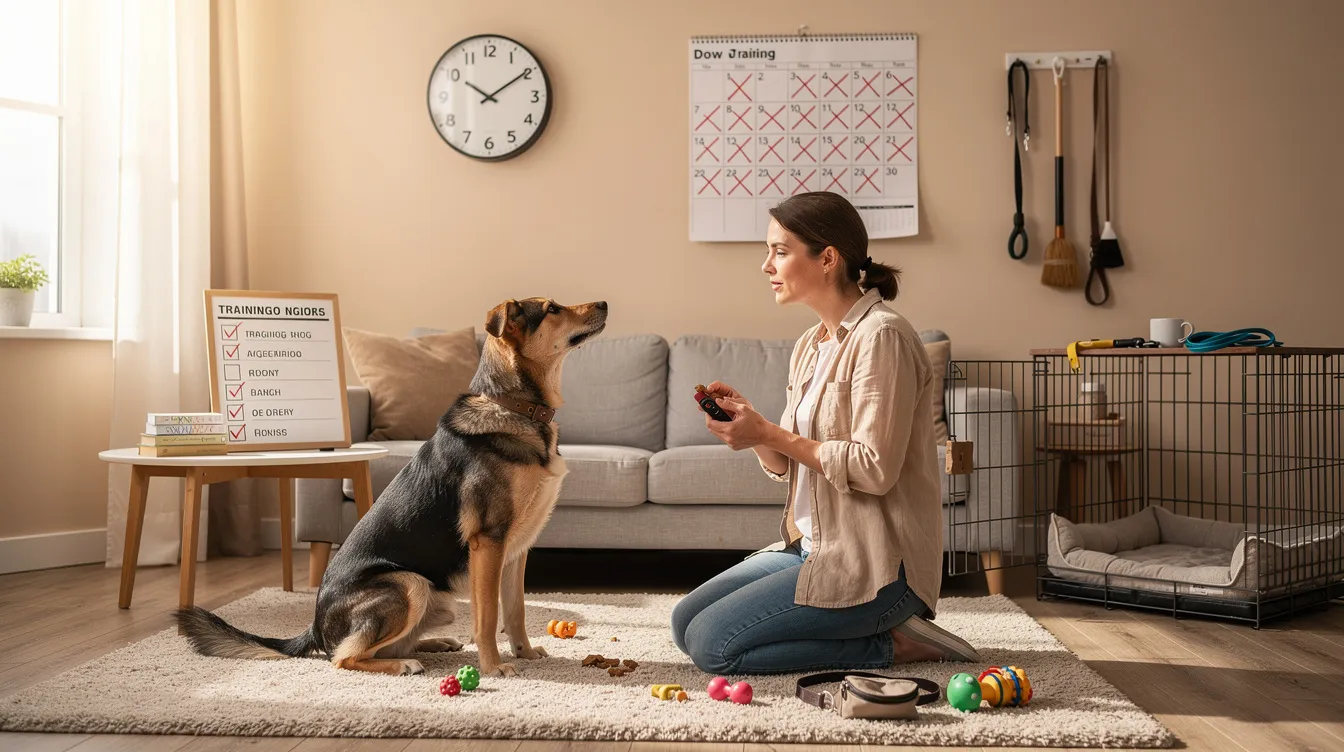
Training is a lifelong process, not a linear march to perfection. Understanding common obstacles-and knowing they’re normal-prevents frustration and keeps the process on track. Dog training is not an instant fix, and progress depends on addressing challenges proactively rather than reactively.
Inconsistent Practice at Home
This is the number one reason timelines stretch beyond expectations. Even with excellent professional programs, if home practice is sporadic, gains fade. The solution: structured homework assignments with clear instructions and follow-up from your professional trainer. Most pet parents find that daily 10–15 minute practice sessions-short sessions done consistently-produce dramatically better results than occasional hour-long marathons. Use positive reinforcement techniques to encourage desired behaviors during every practice session.
Regression During Adolescence
Between 6 and 18 months, many dogs go through developmental phases where they seem to “forget” everything they’ve learned. This isn’t starting over-it’s a normal part of the dog’s developmental stage where hormones and curiosity compete with training. The solution is patience and consistent reinforcement. Continue with the same training routines, maintain expectations, and understand that this phase passes. Refresher sessions with a professional trainer during adolescence can be particularly valuable to keep momentum.
Plateau in Advanced Training
Dogs sometimes hit walls in advanced training-recall fails under heavy distraction, off-leash heel breaks down in novel environments, or stay durations stagnate. This often signals that foundational skills weren’t as solid as they appeared, or that the dog’s ability to generalize to new contexts needs more systematic proofing. The solution is professional assessment to identify specific gaps, followed by gradually increasing distractions and varying environments. Advanced skills build on flawless basics. A plateau is feedback, not failure-it tells you exactly what needs reinforcing.
Building a fully trained dog-one that responds reliably across all real-world contexts-is a long-term commitment. Even after completing a core program, ongoing support through periodic check-ins and refresher sessions ensures that good behavior remains strong throughout a dog’s life.
Conclusion and Next Steps
Professional dog training timelines range from 4 to 6 weeks for basic obedience to 6 months or more for advanced off-leash control, with intermediate training typically requiring 4 to 6 months. Individual variation based on dog’s breed, age, temperament, prior experience, and owner consistency is significant. No responsible professional trainer will promise an exact timeline without first assessing your individual dog-but the benchmarks in this guide reflect what most dogs achieve under structured, professional programs with consistent owner participation.
To determine the right program and realistic timeline for your dog:
- Schedule a free phone consultation to discuss your dog’s specific needs, history, and behavioral challenges
- Review available training packages to understand program options and pricing
- Commit to the daily practice that transforms professional training into permanent results
If you’re ready to start training, the best time is now-whether you have a young puppy in need of early socialization or an older dog with ingrained habits. Every week of delay allows unwanted behaviors to become more established and harder to change.
Related topics worth exploring: ongoing maintenance training to prevent regression, specialized programs like agility training or therapy dog preparation, and how to transition smoothly between training phases as your dog progresses.
Frequently Asked Questions
How quickly will I see results from professional training?
Most dogs show noticeable improvement within 2–3 weeks of structured training. You’ll typically see better leash manners, improved responses to basic commands like sit and down, and increased attention during training sessions. However, reliable behavior across different environments takes longer-usually 6–8 weeks for basic obedience. Progress depends on the dog’s history, the specific issues being addressed, and how consistently pet owners practice at home.
What’s the difference between board & train and private lesson timelines?
Board & train compresses the timeline significantly because the dog receives daily training sessions-sometimes multiple per day-under professional supervision. A dog might accomplish in 2–3 weeks of board & train what would take 6–8 weeks of weekly private lessons. However, private lessons build owner skills simultaneously, which can lead to stronger long-term maintenance. The choice between board & train and private lessons depends on your schedule, budget, and the severity of your dog’s issues. Either path requires that the dog owner commits to ongoing reinforcement.
How long does it take to fix aggressive behavior?
Behavioral training for aggression can require 3 to 12 months depending on severity. Mild reactivity or leash aggression may improve noticeably in 4–6 weeks of intensive work, but reliable, lasting change in moderate-to-severe aggression typically takes 3–6 months minimum. Dogs with deep fear-based aggression or multiple triggers may need even longer, sometimes with veterinary behaviorist involvement alongside training. There is no instant fix for aggression-rushing the process risks setbacks and safety issues.
Can older dogs learn as quickly as puppies?
Older dogs can absolutely learn new behaviors, but research shows that responsiveness to training tends to decline with age. A young dog during peak neuroplasticity (8–16 weeks) absorbs new information fastest. Adult dogs benefit from better focus and longer attention spans, allowing for more productive sessions. Senior dogs may need adapted methods-shorter sessions, accommodations for physical limitations-but remain capable learners. The saying “you can’t teach an old dog new tricks” is simply false, though the training process may take a bit longer.
What happens if my dog doesn’t progress in the expected timeframe?
If a dog isn’t progressing, the first step is identifying the cause. Common culprits include inconsistent home practice, undetected health or pain issues, an incorrect training approach for that dog’s temperament, or missing foundational skills that weren’t adequately built. A professional assessment can pinpoint what’s stalling progress and adjust the plan accordingly. Sometimes the training methods need adapting; sometimes the environment needs modification. In some cases, a veterinary evaluation is warranted to rule out physical conditions masquerading as behavioral issues. The timeline should be adjusted rather than the dog being labeled “untrainable”-with the right approach, progress is always possible.