
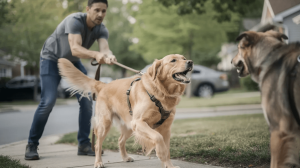
Leash reactivity in dogs describes an intense response to a trigger while a dog is on a leash. It may include barking, lunging, growling, snapping, whining, or trying to move away. Triggers can include another dog, a jogger, a bike, or a loud truck. If walks have become stressful and you’ve started crossing the street to avoid encounters, this guide explains possible causes, practical management steps, and when to seek help.
This guide focuses on reactions during everyday walks. If your dog has bitten, redirects toward you, or is difficult to control safely, start with your veterinarian and an experienced behavior professional rather than relying on a general article. Dog owners in the New River and Roanoke Valleys can use the steps below to understand their dog’s behavior and prepare for individualized guidance.
Managing leash reactivity usually involves reducing overwhelming encounters, building more comfortable responses to triggers, and teaching useful walking skills. Professional guidance can help identify the dog’s needs and improve the training plan, but progress varies. No particular format or level of effort guarantees an outcome.
Here’s what you’ll take away:
- How reactivity and aggressive behavior can overlap
- Possible causes and contributing factors
- Practical ways to manage distance and begin training
- How to choose equipment and avoid overwhelming encounters
- When veterinary care or professional behavior support is appropriate
Understanding Leash Reactivity in Dogs
Leash reactivity does not establish that a dog is trying to dominate the walk. Fear, frustration, excitement, and other forms of arousal can contribute. The same dog may also react behind a fence, through a window, or in another setting. Reactivity describes the response; it does not, by itself, establish the dog’s motivation or bite risk.
A leash can restrict movement and make it harder for a dog to approach or avoid a trigger. Some dogs bark or lunge; others freeze, hide, or try to retreat. Helping your dog create distance can reduce pressure without treating the behavior as deliberate defiance.
What Leash Reactivity Looks Like on a Walk
Picture this: you’re walking down a quiet street when another dog appears ahead. Your dog stops, stares, and stiffens. Barking follows, then lunging at the end of the leash.
Other dogs may whine, hide behind their handler, or try to move away. The response matters even when it is less dramatic than barking.
Common triggers include other dogs, unfamiliar people, joggers, bikes, vehicles, and particular locations associated with previous experiences. A dog may be comfortable at one distance and struggle when the trigger moves closer.
If you’ve noticed when your dog first reacts, the distance involved, and which routes are hardest, you already have useful information for the training plan.
What’s Happening Emotionally and Physically
A stressful encounter can increase arousal and make another encounter harder to handle. Recovery varies with the dog and the situation; there is no useful universal 72-hour rule for planning walks. After a difficult outing, choose an easier environment and watch your dog’s behavior before attempting another training session.
Fear-related behavior may function to increase distance, while frustration may occur when a dog cannot reach something they want. Motivations can overlap. Previous experiences and repeated encounters may also affect how a dog responds to a route, location, or walking routine.
Watch for changes such as prolonged staring, stiff posture, altered breathing, repeated attempts to move away, or difficulty disengaging. Lip licking, yawning, tail position, and raised hackles can add context, but no single signal proves a particular emotion or predicts a bite.
To choose an appropriate approach, consider both the behavior you observe and the circumstances surrounding it.
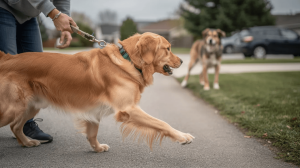
Root Causes and Risk Factors for Leash Reactivity
Leash reactivity can involve temperament, early experiences, health, learning history, and the walking environment. Understanding the factors relevant to your dog helps you choose a training approach and set realistic expectations.
Early Socialization, Past Experiences, and Genetics
Early puppyhood is an important period for social development. The American Veterinary Society of Animal Behavior emphasizes safe, positive socialization during the first three months of life. Experiences should be manageable rather than overwhelming, and owners should discuss appropriate exposure and disease precautions with their veterinarian. Early experiences influence risk, but they do not determine every adult dog’s behavior.
The AVSAB puppy socialization statement explains the importance of early experiences that avoid excessive fear or withdrawal. avsab.org
An upsetting encounter can contribute to fear of similar situations later. Temperament and genetic factors may also influence behavior, but breed alone does not identify the cause or severity of an individual dog’s reactions. A survey of reactive-dog owners cannot establish the proportion of all reactive dogs that are purebred or prove that a breed group is more likely to react.
Reflect on when the behavior began. Did it follow an incident? Has it changed as your dog matured? These details can help a professional assess the situation without assuming there is one explanation.
Equipment, Handling, and the Walk Environment
Leash tension, abrupt movements, and changes in handling can affect an encounter. Practice predictable movement and safe leash handling, but do not blame yourself for feeling anxious. Your dog’s reactions are not proof that your emotions caused the problem.
Equipment should fit securely and suit the dog’s size, strength, and behavior. A well-fitted harness and fixed-length leash can help you manage distance, but attachment points and fit vary. Avoid assuming a particular design will stop pulling or resolve reactivity.
In Roanoke, Blacksburg, and surrounding communities, consider the layout of your usual routes. A narrow path, apartment hallway, blind corner, or crowded sidewalk may leave little room to move away. Choose routes with better visibility and enough space for an alternative path.
Adjusting the route can make practice more manageable even before your dog’s behavior changes.
Is It Leash Reactivity or Aggression?
Owners often want to know whether barking and lunging mean their dog is aggressive. The terms overlap, and the label alone does not determine the training plan. Specific behavior, context, history, and safety risks are more useful.
Key Differences in Motivation and Context
A dog can show aggressive behavior only in particular situations, including while on leash. Some dogs behave differently in other settings, but friendliness off leash does not establish safety during a leashed encounter. Do not remove the leash or arrange a greeting to test whether your dog is “really” aggressive.
A 2026 questionnaire study of dog-reactive dogs examined different response patterns. Its findings reinforce the value of looking at specific behaviors rather than assuming all reactive dogs have the same risk profile. Owner-reported differences between settings do not, by themselves, prove what caused the behavior. ScienceDirect
Seek help promptly for bites or near bites, redirected snapping toward the handler, escalating reactions, or difficulty maintaining physical control. Record what happened before, during, and after the incident rather than trying to infer intent from barking or lunging alone.
When to Involve a Veterinarian or Behavior Professional
Arrange a veterinary assessment if behavior changes suddenly, your dog appears painful, or reactions become more intense. Pain and other medical problems can contribute to behavior changes. Your veterinarian can assess these factors and determine whether additional treatment or a veterinary behavior referral is appropriate.
For some dogs, a treatment plan may include prescribed medication alongside management and behavior modification. This is a veterinary decision, not a substitute for a suitable training plan. The Merck Veterinary Manual’s behavior guidance discusses medical assessment and individualized treatment. Merck Veterinary Manual
Contact an experienced behavior professional if reactions are escalating, you feel unsafe, or your household needs a clearer management plan. Off Leash K9 Training New River & Roanoke Valleys lists an eight-lesson Behavioral Modification Management program for aggression, reactivity, and high anxiety. Review its behavior training options and discuss your dog’s history before booking. No program guarantees complete resolution.
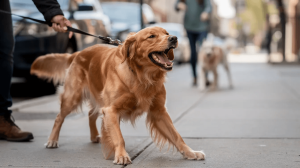
Practical Strategies to Improve Leash Reactivity
Management and training serve different purposes. Management reduces overwhelming encounters now; training develops more comfortable responses and useful skills over time. Use both, and adjust the plan when your dog’s behavior shows that the current task is too difficult.
Step-by-Step Training Plan for Walks
Image 2 placement: Handler rewarding a voluntary check-in. Caption: “Illustration: Practice rewarding check-ins in an easy setting before adding distractions.”
Begin with skills practiced in a quiet setting. Planned training around a trigger should be brief and manageable, rather than an attempt to work through every encounter on a busy walk.
- Choose lower-traffic routes and times. Avoid narrow paths, blind corners, and other places where you cannot create space.
- Bring suitable rewards. Use small treats your dog enjoys and tolerates. Follow veterinary dietary guidance when needed.
- Start at a workable distance. Your dog should be able to notice the trigger, move normally, and disengage without prolonged staring or escalating tension. Begin farther away than the point where reactions usually occur. Food acceptance alone does not prove comfort.
- Pair manageable exposure with rewards. At a comfortable distance, the trigger can predict suitable food. Separately, use a familiar marker to reward behaviors such as looking back at you or moving away with you. Avoid encouraging a prolonged stare, and seek help with timing if you are unsure.
- Leave before the task becomes too difficult. Use a familiar “let’s go” cue and move away where safe. Practice the cue without triggers first.
- Adjust difficulty based on behavior. Reduce distance only after repeated comfortable practice, and change one variable at a time. Some sessions should maintain or increase distance. Record the trigger, approximate distance, response, and recovery to track progress.
Distance gives you room to keep the task manageable. The amount of improvement varies, and the plan should change if your dog repeatedly becomes overwhelmed.
Calm Leash Handling and Body Language for Humans
Image 3 placement: Dog following its handler during a direction change. Caption: “Illustration: Practice direction changes with a loose leash in a quiet setting.”
Use a secure grip that suits your dog’s size and strength. Avoid wrapping the leash around your wrist, and maintain slack when you can do so safely.
When a trigger appears, use a practiced direction change to create space where it is safe. Predictable handling can make your response easier to carry out, but relaxed posture does not guarantee that your dog will feel comfortable. Prioritize distance and physical control over trying to appear calm.
Practice at home first. Walk through easy direction changes and reward your dog for following. If you cannot physically control your dog, obtain individualized guidance before attempting training around triggers.
Using Distance, Barriers, and Routine Changes
Image 1 placement: Handler maintaining space from another dog. Caption: “Illustration: Choose enough space for your dog to notice a trigger without becoming overwhelmed.”
Your dog’s workable distance can change with the trigger, its movement, the environment, and your dog’s condition that day. Treat it as an observation, not a fixed measurement.
Use a safe visual barrier, such as a hedge or parked vehicle, when it gives you more space without creating another hazard. Stay out of traffic and avoid entering private property without permission. Check your exit route before moving into a narrow space.
Choose wider routes, quieter times, or a different location when practical. If a walk repeatedly produces intense reactions, shorter outings and appropriate enrichment in a safe space may be more manageable while you develop a plan.
Do not force greetings or keep your dog close to a trigger until they stop reacting. Quiet behavior after overwhelming exposure does not necessarily mean the dog is comfortable
Training Tools, Programs, and Professional Support
Equipment can assist with handling, but it does not establish why the dog reacts or replace behavior work. Choose both the equipment and the training plan according to the individual dog.
Choosing and Using Equipment Responsibly
Harness and fixed-length leash: Choose secure, well-fitted equipment that lets you maintain control and manage distance. No attachment point or leash length is appropriate for every dog and setting.
Head halter: Some dogs may benefit from one, but it requires gradual conditioning and careful handling. Do not jerk the leash or allow a dog to hit the end at speed. Seek help with fit and use.
Long line: Reserve it for suitable open spaces and controlled exercises. Extra length can create hazards around traffic, unfamiliar dogs, or narrow paths.
Basket muzzle: For bite-risk cases, ask a qualified professional whether a properly fitted, gradually conditioned muzzle should be part of the plan. It does not replace distance, supervision, or a leash.
Training methods: The American Veterinary Society of Animal Behavior recommends reward-based methods and advises against aversive methods, including electronic shock, prong, and choke collars. Do not attempt to stop reactions by punishing warning behavior or forcing exposure.
You can review the AVSAB humane dog training position statement for its recommendations. avsab.org
Home Training vs. Private Lessons vs. Board & Train
| Format | Owner involvement | Main consideration |
| Home practice | Owner manages daily routines and exercises | Use an appropriate plan; seek help if safety or progress is uncertain |
| Private lessons | Owner practices with guidance and between sessions | Behavior-focused assessment may be more appropriate than standard obedience |
| Board & Train | Trainer handles residential practice; owner continues training afterward | Eligibility, methods, transfer of skills, and suitability must be assessed individually |
Reward-based training is appropriate beyond mild cases, although dogs with significant fear or bite risk may need coordinated veterinary and behavioral care. Standard obedience lessons and behavior-focused lessons serve different needs.
For residential training, the official site describes the 3-Week Advanced option as suitable for some slightly reactive, anxious, or fearful dogs after consultation. Board & Train is not automatically appropriate for severe reactivity, and no format guarantees faster results or off-leash safety.
Review the published program details and ask about methods, equipment, eligibility, and owner follow-through. The site lists a prong collar for Behavioral Modification Management and e-collars for some residential programs; do not assume every local program uses the reward-based approach described in this guide. nrvandroanokedogtrainer.com
If you’re unsure which option fits your situation, use the contact page to request a free consultation and discuss your dog’s history.
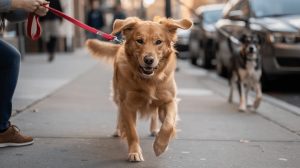
Common Challenges and How to Handle Them
Even with a useful plan, setbacks can happen. Review the difficulty of the situation, your dog’s health and comfort, and the consistency of the approach rather than assuming every difficult walk reflects failed training.
My Dog Reacts Before I Can Do Anything
A sudden reaction may mean the trigger appeared too close, the encounter was unexpected, or the situation was harder than anticipated. Create distance where safe, use a practiced exit cue if your dog can respond, and choose a route with better visibility next time. Practice the movement in an easy setting before relying on it outdoors.
Use a barrier only when it provides a safe exit or extra space. If your dog redirects toward you, avoid reaching into their mouth or grabbing near their face. Seek an individualized handling and safety plan rather than relying on a generic maneuver.
After the encounter, move somewhere quieter if possible. You do not need to resume training immediately. An easier outing or ending the walk may be more appropriate.
Progress Is Slow or Inconsistent
Track your walks in a notebook or phone app. Note the trigger, approximate distance, intensity of the response, and time needed to return to ordinary behavior.
Compare similar situations. A calm response to a stationary dog far away is different from passing a running dog on a narrow sidewalk.
Useful improvements may include:
- Easier disengagement
- More comfortable movement
- Fewer intense reactions at a comparable distance
- A quicker return to normal behavior
- Following an exit cue more readily
There is no dependable four-to-eight-week deadline for improvement. Useful progress may include easier disengagement, fewer intense reactions, or quicker recovery in comparable situations. Seek professional help whenever safety is uncertain or repeated practice is not producing comfortable responses; you do not need to wait a set number of weeks.
Family Members Aren’t on the Same Page
Agree on a few simple household rules: consistent cues, appropriate distance, and a shared response when a trigger appears. Everyone who walks the dog should understand the plan and be able to manage the dog safely. Ask the trainer how household members can participate in owner instruction.
Keep instructions practical. For example: avoid unfamiliar greetings, use the same exit cue, and move away when the dog begins prolonged staring or stiffening.
Frequently Asked Questions
Can a leash-reactive dog be friendly in other situations?
Yes, behavior can change with context. However, friendliness elsewhere does not establish that an on-leash greeting is safe. Do not remove the leash or approach another dog to test the distinction.
How long does leash-reactivity training take?
There is no reliable completion deadline. Progress depends on the dog’s history, health, triggers, environment, and training plan. Some dogs need ongoing management even when their responses improve.
Does taking treats mean my dog is comfortable?
Not necessarily. Consider food acceptance alongside posture, movement, breathing, and the ability to disengage. A dog that eats while staring rigidly or repeatedly lunging may still be struggling.
Can medication help?
A veterinarian may recommend medication for some dogs as part of a broader treatment plan. It should be considered through veterinary assessment and used alongside appropriate management and behavior work.
Conclusion and Next Steps
Leash reactivity can make everyday walks difficult, but a clearer management and training plan can help. Start by observing the behavior, creating workable distance, and practicing useful skills in easier settings. Improvement varies, and some dogs need ongoing management or coordinated professional care.
Your dog’s reactions do not mean you have failed as an owner. Focus on practical changes you can make now and seek help when the situation exceeds what you can manage safely.
Here are your next steps:
- Observe and document. Record triggers, approximate distances, reactions, and recovery.
- Choose manageable routes. Look for visibility, space, and safe alternatives.
- Practice easy skills first. Teach check-ins and direction changes away from triggers.
- Check equipment. Confirm fit, condition, and your ability to maintain control.
- Discuss the next step with a professional. If reactions are escalating or you feel unsafe, contact your veterinarian and an experienced behavior professional. Local owners can contact Off Leash K9 Training New River & Roanoke Valleys for a free consultation about available programs.
Call (540) 750-1955 to discuss your dog’s history, current challenges, and training goals.
Additional Resources
These resources can support a professional plan or help you prepare questions:
- AVSAB humane dog training statement: Guidance on training methods and animal welfare.
- Merck Veterinary Manual: Behavior problems of dogs: Medical contributors, assessment, and treatment considerations.
- Peninsula Humane Society & SPCA: On-leash reactivity: Practical management information.
- A simple walk log: Record the trigger, setting, approximate distance, response, recovery, and what you changed.
- Questions for your trainer: Ask what written instructions, practice exercises, and follow-up support are included in the selected program.
Bring your observations to the consultation. Specific examples help the professional assess your dog’s needs more accurately than a label alone.