
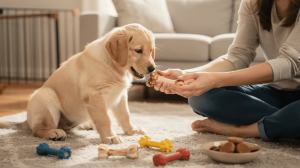
Puppy nipping and biting are common during play, exploration, and teething, but that does not make those sharp baby teeth any less painful on your hands and ankles. With consistent training and management, you can help your puppy develop gentler ways to interact.
This guide covers practical methods for managing typical puppy mouthing, play biting, and teething-related chewing. It does not diagnose fear-related behavior, resource guarding, pain-related biting, or incidents that cause injury. Those situations may require veterinary evaluation and guidance from a qualified behavior professional. The target audience is new puppy owners and pet parents who want practical techniques rather than quick fixes that do not last.
Puppy nipping and biting usually improve gradually through consistent redirection to appropriate toys, brief pauses in play when teeth touch skin, adequate rest, and reinforcement of calm behavior. The timeline varies by puppy, and some continue mouthing during teething or adolescence. Persistent, escalating, or fear-related biting may require professional assessment.
By the end of this article, you will:
- Understand the difference between common puppy mouthing and biting that requires closer attention
- Learn how to redirect your puppy from hands and clothing to appropriate toys
- Use brief play pauses and positive reinforcement consistently
- Recognize when veterinary or professional behavioral support may be needed
Understanding Puppy Nipping and Biting Behavior
Puppy nipping can be frustrating, yet it serves a developmental purpose. Puppies use their mouths to explore objects, initiate play, and learn about social interactions. Understanding this context can help you respond consistently instead of reacting out of frustration.
Normal Developmental Behavior vs. Problem Behavior
Normal puppy mouthing commonly occurs during play, exploration, teething, or periods of excitement. The puppy may have a generally loose body, take breaks, respond to redirection, and return to calmer behavior when the interaction stops. However, no single signal, including a wagging tail or play growl, should be interpreted by itself.
Biting deserves closer assessment when it is accompanied by repeated freezing, sustained stiffness, avoidance, guarding, attempts to escape, or snapping during handling or calm interactions. Bites that break skin, escalate in intensity, or occur unpredictably also warrant professional attention. These behaviors may involve fear, pain, frustration, guarding, or overarousal, so they should not automatically be labeled aggression based on one body-language signal.
The Role of Bite Inhibition in Puppies
Bite inhibition is a dog’s ability to moderate the force of its mouth. This learning begins during interactions with the mother and littermates before most puppies enter their new homes. If one puppy bites too hard, the other puppy may vocalize, stop playing, or move away, helping the first puppy learn that rough biting interrupts social interaction.
Learning continues after adoption, and there is no universal age by which every puppy has mastered bite inhibition. Owners can support the process by stopping play briefly when teeth cause pain and rewarding gentle interaction. The long-term goal is to teach the puppy that human skin and clothing are not appropriate biting targets. Guidance from VCA Animal Hospitals and the ASPCA provides additional information about puppy mouthing and play biting.
Why Puppies Nip and Bite
Understanding why your puppy grabs at your hands, clothing, and ankles helps you choose an appropriate response. Common contributing factors include play, exploration, teething, attention-seeking, fatigue, overstimulation, frustration, hunger, and insufficient access to suitable chewing activities. Fear, guarding, or pain may also contribute in some cases and require a different approach.
Teething and Physical Development
Puppies have 28 deciduous teeth, which generally finish erupting by approximately six weeks. These baby teeth commonly begin falling out at around 12 to 16 weeks as the permanent teeth erupt. Most dogs have their 42 permanent teeth by approximately 6 to 7 months, although individual timing varies.
Chewing is normal during this period and may help relieve teething discomfort, but puppies also chew to explore, play, and occupy themselves. Provide appropriately sized, puppy-safe chew toys and supervised chilled or frozen rubber toys made for dogs. Avoid hard bones or objects that could fracture teeth, splinter, or create a choking or intestinal obstruction risk. VCA’s puppy teething guidance offers more information about tooth development and safe chewing.
Play and Exploration Behaviors
Puppies explore their environment by biting and chewing. Their mouths help them investigate different textures, shapes, and tastes. Natural play with littermates may include chasing, wrestling, and mouthing, and puppies may try similar behaviors with people after entering a new home.
Avoiding rough hand play can reduce opportunities for a puppy to treat hands and arms like toys. Rapid hand movements, wrestling, and games that encourage grabbing at clothing may increase excitement and mouthing. Instead, channel that energy into structured play with suitable tug, fetch, or chew toys.
Attention-Seeking, Fatigue, and Overstimulation
Puppies may repeat nipping when it reliably starts play or produces an exciting reaction. Yelling, pushing, or rapidly pulling your hands away can sometimes increase arousal and turn the interaction into a chase or wrestling game. Calm redirection and brief withdrawal of attention usually provide clearer feedback.
Overstimulation and fatigue can also contribute to nipping. Young puppies often sleep for much of the day, sometimes up to 18 to 20 hours including naps, although individual needs vary. Frantic nipping, zooming, and difficulty settling may indicate fatigue, excessive stimulation, unmet activity needs, or a combination of factors. A predictable routine with play, training, potty breaks, and quiet rest can make these episodes easier to manage.
Practical Methods to Stop Puppy Nipping and Biting
With a clearer understanding of what drives puppy nipping, you can implement a consistent training approach. Redirection, brief pauses in play, appropriate chewing opportunities, sufficient rest, and reinforcement of calm behavior can all contribute. The right combination depends on the puppy and the circumstances surrounding the biting.
Redirection and Positive Reinforcement Training
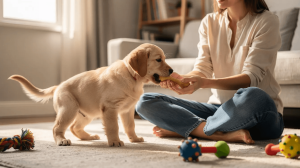
Redirection is useful when a puppy targets hands, clothing, or feet during play, exploration, or teething. Keep appropriate toys within reach so that you can respond calmly and promptly.
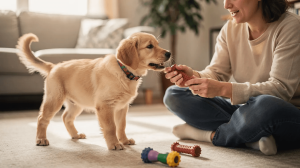
- Offer an appropriate toy when your puppy begins targeting hands, clothing, or feet.
- Reward the correct choice with calm praise, continued play, or a small treat when your puppy engages with the toy.
- Pause the interaction if the puppy returns to biting skin or clothing. Stand up, turn away, or briefly step behind a gate.
- Resume calmly after approximately 10 to 30 seconds, provided the puppy has settled enough to interact without immediately biting again.
- Address the underlying need by considering whether the puppy needs a potty break, nap, meal, safe chewing activity, or a less stimulating environment.
Consistent redirection can help your puppy learn that toys keep play going while biting skin pauses the interaction. Familiar cues such as “sit,” “leave it,” and “drop it” may provide useful alternative behaviors in manageable situations, but they will not prevent every episode of biting. Continue rewarding calm behavior and appropriate toy play while also addressing fatigue, teething, and overstimulation.
Bite Inhibition Training Techniques
| Method | May Be Appropriate For | How to Use It | Important Consideration |
| Yelp and Withdraw | Playful mouthing when the puppy responds by pausing | Make one brief sound, let your hand become still, and pause interaction | Stop using the sound if it excites the puppy or makes biting more intense |
| Brief Reverse Time-Out | Repeated nipping after redirection | Calmly step away or move behind a gate for approximately 10 to 30 seconds, then resume interaction | Avoid chasing, grabbing, or using the puppy’s crate as punishment |
| Professional Assessment | Bites that break skin, guarding, fear, pain-related behavior, or escalating intensity | Consult a veterinarian and a qualified behavior professional for an individualized assessment | Improvement depends on the cause, the puppy, management, and consistent follow-through |
A brief yelp or verbal marker may interrupt some puppies because it resembles feedback received during play. Other puppies become more excited when they hear a high-pitched sound. If yelping increases the behavior, skip it and use a calm, silent pause instead.
A brief reverse time-out teaches that biting skin makes attention and play temporarily unavailable. Rather than physically carrying the puppy away, calmly step behind a gate or leave the puppy-safe area for approximately 10 to 30 seconds. Return without excitement and provide another opportunity to interact appropriately.
Some puppies respond well to redirection followed by a brief play pause when needed. Others require changes to their sleep schedule, environment, play routine, or access to appropriate chewing activities. There is no guaranteed age or number of weeks by which puppy biting will stop, so evaluate progress through changes in frequency, intensity, and the puppy’s ability to redirect.
Avoid physical punishment such as hitting, scruff shaking, alpha rolls, or forcefully holding a puppy’s mouth shut. These methods can increase fear, stress, avoidance, or defensive responses without teaching the puppy an appropriate alternative. Current veterinary behavior guidance recommends reward-based methods for everyday training and behavior concerns.
Common Challenges and Solutions
Even with a consistent approach, puppy owners may encounter specific challenges during nipping training. The following strategies address three common situations.
Persistent Ankle Biting During Walks
Moving feet and loose clothing can trigger playful chasing, herding-related behavior, or general overarousal. Carry a suitable tug toy or a few treats and redirect your puppy before they reach your ankles. If biting begins, stop moving so your feet do not become part of a chase game. Resume walking when the puppy releases and can follow the toy or perform a familiar cue.
Do not rely on another dog to correct this behavior. Interactions with calm, socially appropriate dogs can be valuable when carefully supervised, but another animal should not be used as a training tool or placed in a position where it must discipline the puppy.
Concerning vs. Playful Biting Behaviors
Playful biting often occurs with generally loose movement and may respond to toys, rest, or a pause in interaction. Seek help when biting repeatedly breaks skin, occurs around food or valued objects, accompanies sustained stiffness or avoidance, appears connected to handling or pain, or continues to escalate despite appropriate management.
Begin with a veterinarian when behavior changes suddenly or pain may be involved. For behavioral help, look for a veterinary behaviorist or another qualified professional with documented experience addressing fear, guarding, and biting. The provider also offers a behavior modification program, but the puppy should first be assessed to determine which type of support is appropriate. Written notes about the context can help. Only record video if doing so is safe and does not provoke another incident.
Multiple Family Members Getting Different Results
Inconsistent responses can make puppy nipping more difficult to change. If one family member encourages rough hand play while another stops every interaction when teeth touch skin, the puppy receives unclear feedback. Establish simple household rules covering approved toys, play breaks, rewards, and interactions with clothing or hands.
Children of every age should be closely supervised around a mouthy puppy and should not be responsible for physically managing or disciplining the dog. Adults should lead the training and provide children with clear instructions about moving calmly, avoiding rough play, and getting adult help when the puppy becomes overexcited.
Conclusion and Next Steps
Puppy nipping is a common developmental behavior, not evidence that a puppy is bad or deliberately disobedient. Consistent redirection, appropriate chewing opportunities, adequate rest, brief pauses in play, and reinforcement of calm interaction can help reduce it. Improvement varies, so owners should not rely on a fixed age by which every puppy will stop biting. The key is teaching your puppy what to do while avoiding methods that create fear or unnecessary stress.
Your immediate action steps:
- Keep suitable chew and tug toys available where interactions commonly occur.
- Use a brief play pause when teeth touch skin, avoiding yelping if the sound increases excitement.
- Review your puppy’s sleep, potty, exercise, enrichment, and feeding schedule for unmet needs.
- Establish consistent household rules and supervise every interaction between the puppy and children.
- Track the frequency, intensity, triggers, and recovery from biting so you can identify improvement or escalation.
Foundational cues taught through basic obedience training, such as sit, leave it, and drop it, can provide useful alternative behaviors and help owners manage exciting situations. However, cues alone will not resolve every case of biting.
The provider’s Puppy Lessons consist of six private 30-minute sessions for puppies over 10 weeks and up to 6 months old. The program focuses on engagement, markers, basic cues, leash manners, routines, structure, and exposure rather than supervised group play.
FAQs
What are puppy classes, and how can they help with biting?
Puppy classes can help owners learn age-appropriate training, handling, management, and socialization techniques. Some group classes include carefully supervised puppy interaction, while private lessons generally do not. Confirm the class format, training methods, vaccination requirements, and opportunities for controlled socialization before enrolling.
Can playing tug-of-war encourage my puppy to bite more?
Tug can provide an appropriate outlet for chasing, grabbing, and pulling when the puppy targets the toy rather than hands or clothing. Use cues such as “take it” and “drop it,” keep the toy away from your body, and pause if teeth contact skin. Tug can support engagement and self-control practice, but it should not be described as a guaranteed way to teach bite inhibition.
Why should physical punishment be avoided when training a puppy not to bite?
Physical punishment can increase stress, fear, avoidance, or defensive behavior without teaching the puppy what to do instead. Reward-based training, calm redirection, environmental management, and brief pauses in play provide clearer and safer ways to address normal puppy mouthing.
What is the “bad taste” method, and is it effective?
A pet-safe taste deterrent may discourage chewing on certain household objects, but results vary. Follow the product label and do not apply it to your skin, clothing, furniture, or another surface unless that use is specifically permitted. Never spray it into the puppy’s face or mouth, and use management, redirection, and appropriate chew toys instead of relying on the deterrent alone.
How can I reinforce good behavior to stop my puppy from biting?
Reward calm interaction and appropriate toy use with quiet praise, a small treat, or continued play. If teeth touch skin or clothing, pause the interaction briefly and resume when your puppy is ready to engage appropriately. Consistency helps your puppy understand which behaviors keep attention and play available.