
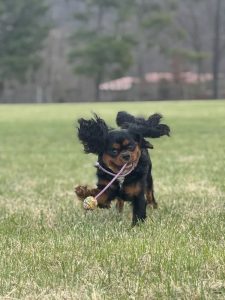
Why does my dog pull on the leash? Dogs often pull because they want to reach something interesting, move faster, or explore their surroundings. Pulling can also become a learned habit when it repeatedly helps them get where they want to go. Some dogs pull because they haven’t yet learned to walk comfortably on a loose leash.
If your dog drags you toward every tree, person, or interesting smell, you are not alone. Walking at a human pace is a skill dogs need to learn. Simply attaching a leash does not teach them to stay close or adjust their speed.
For dog owners in Roanoke, Blacksburg, Christiansburg, and the surrounding New River Valley, loose-leash walking can make everyday outings safer and more enjoyable.
This guide explains why dogs pull, how to recognize different types of pulling, and how to teach better leash manners through consistent practice.
Why Do Dogs Pull on the Leash?
Dogs experience walks differently from people.
While you may want to follow a particular route, your dog is noticing smells, sounds, movement, and unfamiliar objects.
Pulling often happens when those interests become more rewarding than walking beside you.
1. Your Dog Wants to Explore
Dogs use their sense of smell to gather information about their environment.
During a walk, your dog may notice a scent several feet away and immediately move toward it.
If the leash tightens, your dog may keep pulling because reaching that smell is the immediate goal.
This does not necessarily mean your dog is ignoring you deliberately.
Your dog may simply be following an interesting scent without understanding that you expect a different walking behavior.
Sniffing is a normal activity. Instead of trying to eliminate it, teach your dog when it can explore and how to move with you between sniffing opportunities.
2. Pulling Has Worked Before
Dogs learn from the consequences of their behavior.
Imagine your dog sees a tree and pulls toward it.
You follow, and your dog reaches the tree.
From the dog’s perspective, pulling successfully led to something rewarding.
Repeated experiences can strengthen that habit.
The solution is to teach that walking with a loose leash, rather than pulling, allows the walk to continue.
The American Kennel Club’s loose-leash training guidance emphasizes rewarding appropriate walking behavior and practicing manageable distances.
3. Your Dog Naturally Walks Faster Than You
Some dogs prefer a quicker pace than their owners.
Age, size, energy level, and individual movement patterns can influence walking speed.
A young, energetic dog may reach the end of the leash repeatedly because it moves faster than the person holding it.
This is not automatically a behavioral problem.
However, your dog still needs to learn how to adjust its movement when walking on a leash.
Start by rewarding your dog for moving near you at a comfortable pace.
4. Your Dog Gets Excited Around Distractions
Other dogs, people, bicycles, wildlife, and unfamiliar environments can quickly capture your dog’s attention.
For example, your dog may walk calmly along a quiet street but begin pulling when another dog appears.
The behavior may reflect excitement, frustration, fear, or a combination of factors.
If your dog also barks, lunges, growls, freezes, or struggles to disengage, the issue may involve leash reactivity rather than ordinary pulling.
Read our guide to leash reactivity in dogs for a closer look at those behaviors.
5. Your Dog Has Not Learned Loose-Leash Walking
Walking on a leash is not an automatic skill.
A dog may understand “Sit” or “Come” but still have no clear idea what is expected during a walk.
In general, loose-leash walking means moving with your handler without continuously tightening the leash. It does not necessarily require a formal heel throughout an entire walk. Specific training programs may teach a closer walking position, so follow the expectations and cues established for your dog.
Your dog can sniff, explore, and change position while still practicing good leash manners.
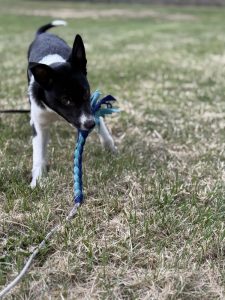
Is Leash Pulling a Sign of Dominance?
No. Leash pulling does not establish that a dog is trying to dominate its owner.
Dogs may pull because they want to explore, move faster, reach another animal, or escape something uncomfortable.
The behavior itself does not tell you which motivation is responsible.
Instead of focusing on dominance, observe what happens immediately before and after the pulling.
Ask yourself:
- What is my dog trying to approach or avoid?
- Does pulling happen throughout the walk or only near certain distractions?
- Does my dog slow down in quieter environments?
- Has pulling previously allowed my dog to reach interesting places?
- Does my dog show signs of fear or frustration?
These questions provide more useful information for choosing a training approach.
How to Stop a Dog From Pulling on the Leash
Improving leash manners involves teaching your dog that moving with you is rewarding.
Begin in an easy environment before practicing around busy sidewalks, other dogs, or wildlife.
Step 1: Choose Comfortable Walking Equipment
Use equipment that fits your dog securely and allows comfortable movement.
A well-fitted harness and standard fixed-length leash can be suitable for many dogs.
Before walking, check that:
- The harness or collar fits appropriately.
- Your dog can move without obvious discomfort.
- The leash is long enough to allow some natural movement.
- You can maintain control without wrapping the leash around your wrist.
- The equipment does not rub, pinch, or restrict normal movement.
A front-clip harness may help some owners manage pulling while training, but equipment alone does not teach loose-leash walking.
Avoid relying on leash jerks or painful corrections. The American Veterinary Society of Animal Behavior’s humane training guidance recommends reward-based methods for dog training and behavior modification.
Step 2: Start in a Quiet Environment
Begin in a familiar area with minimal distractions.
This might be a hallway, fenced yard, or quiet outdoor space where your dog can concentrate.
Hold the leash comfortably and take a few steps.
When your dog moves near you without tightening the leash, offer a small reward.
Repeat the exercise in short sessions.
Do not expect your dog to complete a long walk immediately.
The first goal is to help your dog recognize that staying near you and keeping the leash relaxed can lead to positive outcomes.
Step 3: Reward a Loose Leash
Watch the leash as you move.
When it hangs comfortably between you and your dog, mark the behavior with a familiar word such as “Yes” if your dog knows that marker.
Then provide a reward.
You can reward:
- Walking near your side
- Slowing down to match your pace
- Turning toward you voluntarily
- Moving with you after a direction change
- Maintaining a relaxed leash for several steps
Deliver rewards promptly so your dog can connect them with the desired behavior.
At first, you may need to reward frequently.
As your dog’s understanding improves, gradually build the number of steps between rewards.
Step 4: Stop When the Leash Becomes Tight
If your dog pulls forward, stop moving when it is safe to do so.
Avoid dragging the dog backward or jerking the leash.
Wait for your dog to reduce the tension or encourage it to move back toward you using a familiar, gentle cue.
Once the leash relaxes, reward the behavior and continue walking.
The important lesson is that a tight leash does not automatically lead to forward movement.
Be patient. Some dogs need repeated practice before they understand the pattern.
If stopping causes frustration or makes the dog more reactive, change the exercise. Try an easier environment, increase distance from distractions, or practice direction changes instead.
Step 5: Practice Changing Direction
Changing direction can help your dog learn to pay attention to your movement.
Begin in an open, quiet area.
Take a few steps in one direction.
Then turn gently and encourage your dog to follow.
Reward your dog when it moves with you.
Avoid sudden turns that could pull sharply on the leash.
As your dog improves, practice moving in different directions while keeping the exercise relaxed.
The goal is cooperation, not surprising your dog or forcing it to remain beside you.
Step 6: Use Sniffing as a Reward
Food is not the only reward available during walks.
For many dogs, reaching an interesting scent is highly motivating.
You can use that interest to reinforce loose-leash walking.
For example:
- Approach an area your dog wants to investigate.
- Reward a few steps with a relaxed leash.
- Give a release cue such as “Go sniff.”
- Allow your dog to investigate while maintaining safe control.
- Resume walking when appropriate.
This teaches your dog that cooperating with you can lead to opportunities to explore.
Do not require a formal heel throughout the entire outing unless you have a specific reason to practice that skill.
A comfortable walk should allow appropriate movement and sniffing.
Step 7: Add Distractions Gradually
Once your dog can maintain a loose leash in a quiet setting, begin practicing in slightly more distracting environments.
You might progress from:
- A quiet room
- A familiar yard
- A low-traffic sidewalk
- A familiar neighborhood route
- An area with mild activity at a comfortable distance
Increase difficulty gradually.
If your dog starts pulling constantly, return to an easier setting.
Do not increase distance, duration, and distraction level all at once.
Loose-Leash Walking vs. Heel: What Is the Difference?
Loose-leash walking and heeling are related but different skills.
| Skill | What it means | When it is useful |
| Loose-leash walking | Your dog walks without continuously tightening the leash. | Everyday neighborhood walks |
| Heel | Your dog maintains a taught position close to your side. | Specific obedience exercises or situations requiring closer control |
| Recall | Your dog returns when called. | Returning to the handler when safely practiced |
| Attention cue | Your dog directs attention toward you when asked. | Preparing for familiar instructions |
A dog does not need to heel for an entire walk to demonstrate good leash manners.
For most everyday outings, comfortable loose-leash walking is a practical goal.
If you are exploring professional obedience training, the local dog obedience training page describes walking and other foundational skills addressed in the available programs.
What If My Dog Pulls Only When It Sees Other Dogs?
Pulling toward another dog may reflect excitement or frustration, but it can also occur alongside fear or defensive behavior.
Watch your dog’s overall response.
A dog that becomes stiff, barks intensely, lunges, or cannot disengage may need a behavior plan that addresses more than leash manners.
Do not force greetings to test whether the dog is friendly.
Instead:
- Increase distance from the other dog.
- Choose a route with room to move away.
- Reward comfortable attention and movement.
- Avoid crowded situations that repeatedly overwhelm your dog.
- Seek professional guidance when reactions are intense or difficult to manage.
The ability to accept a treat does not, by itself, prove that your dog feels safe.
For more information, read how to recognize dog body language and stress signals.
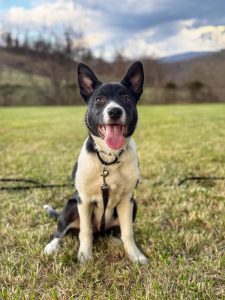
Common Leash Training Mistakes to Avoid
Pulling Back Against Your Dog
Pulling harder on the leash can create an uncomfortable struggle.
It does not necessarily teach your dog how to walk appropriately.
Focus on rewarding relaxed movement and safely redirecting the walk.
Training Only in Busy Places
An environment filled with dogs, people, traffic, and unfamiliar smells can be too difficult for a beginner.
Teach the foundation in quieter settings first.
Being Inconsistent
If pulling sometimes results in reaching an interesting object and other times causes the walk to stop, learning may be slower.
Use clear, predictable expectations.
Everyone who regularly walks the dog should understand the training plan.
Expecting Immediate Results
Loose-leash walking develops through repeated practice.
A dog that succeeds in the yard may still struggle on a busy sidewalk.
Adjust the exercise rather than treating every difficult walk as a setback.
Focusing Only on Distance Walked
A short walk with relaxed leash practice can be more productive than a long outing filled with pulling.
Measure progress by the quality of the behavior, not just the distance traveled.
A Simple Leash Training Routine
Use this sample routine as a flexible starting point.
| Stage | Practice activity | Goal |
| Before the walk | Reward attention and comfortable equipment handling. | Begin calmly. |
| First few steps | Reward movement near you with a relaxed leash. | Reinforce the desired behavior. |
| When pulling begins | Stop or change direction safely. | Prevent pulling from becoming the default way forward. |
| During exploration | Allow appropriate sniffing opportunities. | Make walking cooperatively worthwhile. |
| Before finishing | Practice a few easy steps in a quiet area. | End with a manageable exercise. |
There is no required number of minutes or repetitions for every dog.
Keep sessions short enough that your dog remains comfortable and engaged.
When Should You Seek Professional Help for Leash Pulling?
Consider professional training if your dog pulls so strongly that walks are unsafe, you cannot maintain comfortable control, or progress remains difficult despite consistent practice.
If pulling occurs alongside growling, lunging, snapping, or intense fear, explain those behaviors before beginning a general obedience program.
New or sudden changes in walking behavior may also justify a veterinary examination, particularly if you notice limping, pain, reluctance to move, or other physical symptoms.
The website offers several training options addressing obedience and walking manners. Training methods and equipment vary by program, and some packages include e-collars or prong collars. Review the published training packages and pricing and ask the training team which methods and equipment would be used with your dog.
For an example of a dog’s leash-manners training experience, read how Beau worked on leash walking and door manners in Blacksburg, VA.
Every dog has different needs, and no specific program or timeline guarantees the same result for every household.
Frequently Asked Questions About Dogs Pulling on the Leash
Why does my dog pull on the leash even after training?
Your dog may understand loose-leash walking in familiar settings but struggle when distractions increase. Pulling may also have been reinforced during previous walks. Return to easier exercises and gradually rebuild the behavior in different environments.
Should I stop walking every time my dog pulls?
Stopping can be a useful training technique when it is safe and your dog can respond comfortably. However, some dogs become frustrated or overwhelmed. In those situations, change direction, create distance, or practice in an easier environment.
Is a harness better than a collar for a dog that pulls?
A properly fitted harness may help with comfort and management, particularly for dogs that pull strongly. The best option depends on the individual dog’s size, health, behavior, and equipment fit. A harness does not replace training.
Can an older dog learn to stop pulling on the leash?
Yes. Adult dogs can learn new walking habits. Progress depends on previous experience, health, motivation, and consistency. Begin with manageable exercises rather than expecting immediate changes.
Does leash pulling mean my dog needs more exercise?
Not necessarily. Some dogs pull because they are excited or have not learned loose-leash walking. Exercise needs differ by age, health, breed, and individual circumstances. More exercise alone does not teach appropriate leash manners.
How long does it take to teach loose-leash walking?
There is no guaranteed timeline. Some dogs improve quickly in quiet environments, while others need extended practice around distractions. Look for gradual improvements in relaxed leash movement and responsiveness.
Build Better Leash Manners One Walk at a Time
Dogs often pull on the leash to explore, move faster, or reach something interesting. To improve leash manners, begin in a quiet environment, reward relaxed leash movement, and gradually introduce distractions. Consistent practice and opportunities to sniff can help make everyday walks more comfortable.
If you need help with leash pulling, obedience, or walking around distractions, contact the New River and Roanoke Valleys training team to discuss your dog’s behavior and available training options.